By Kwabena Lindqvist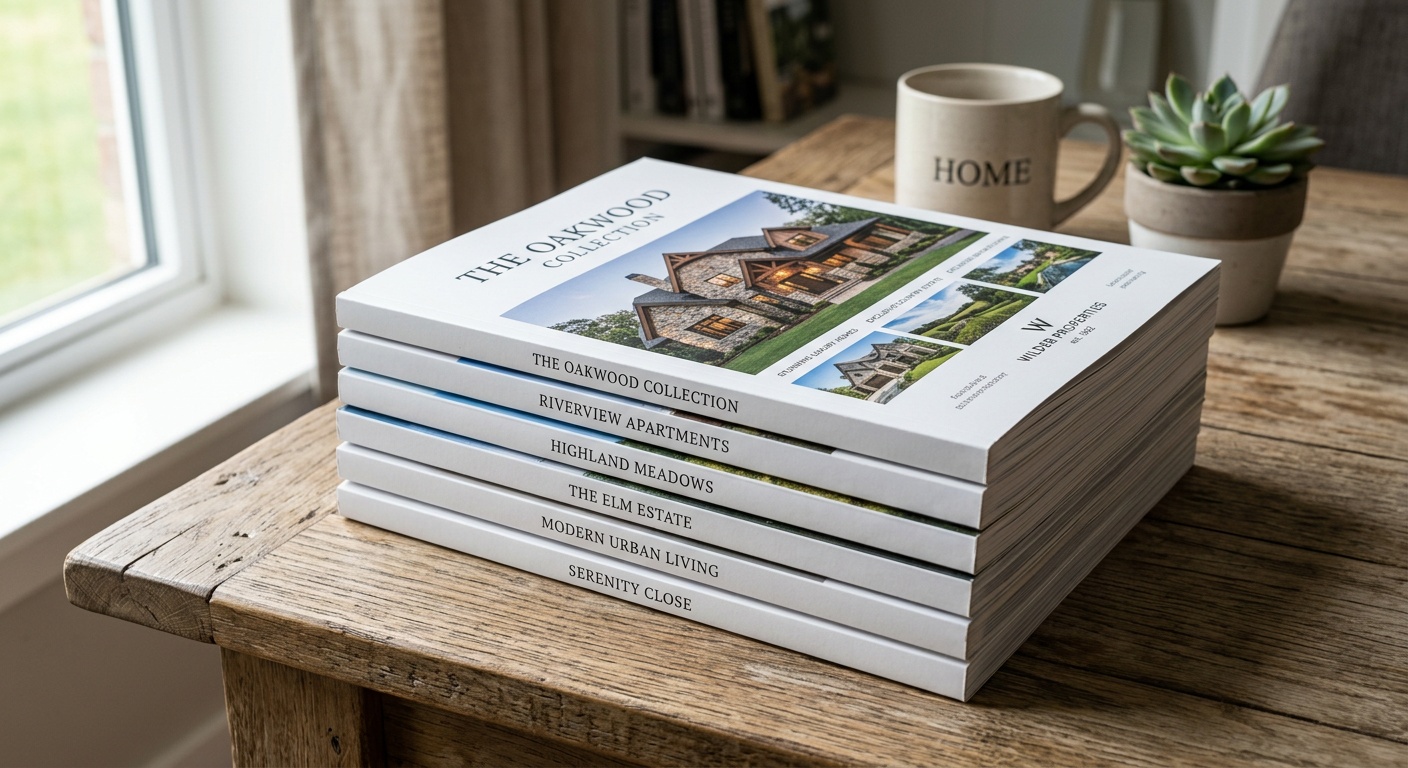
Why Print Brochures Still Matter For New Property Launches in 2026
Reading time: 8 minutes
Table of Contents
- The Digital Overload Problem
- What The Data Actually Shows
- Three Reasons Print Still Converts Buyers
- Case Studies From Recent Launches
- Print vs Digital: A Side-by-Side Comparison
- Common Challenges and How to Solve Them
- Practical Tips for Designing a High-Impact Brochure
- Frequently Asked Questions
- Your Roadmap Forward
The Digital Overload Problem
Ever handed a prospective buyer your beautifully rendered digital brochure link, only to watch them nod politely and never open it? You’re not alone. In 2026, the average property buyer receives an estimated 12 to 15 marketing messages a day across email, WhatsApp, and social media ads. Attention has become the scarcest currency in real estate marketing, and paradoxically, that scarcity is exactly why print is making a quiet comeback.
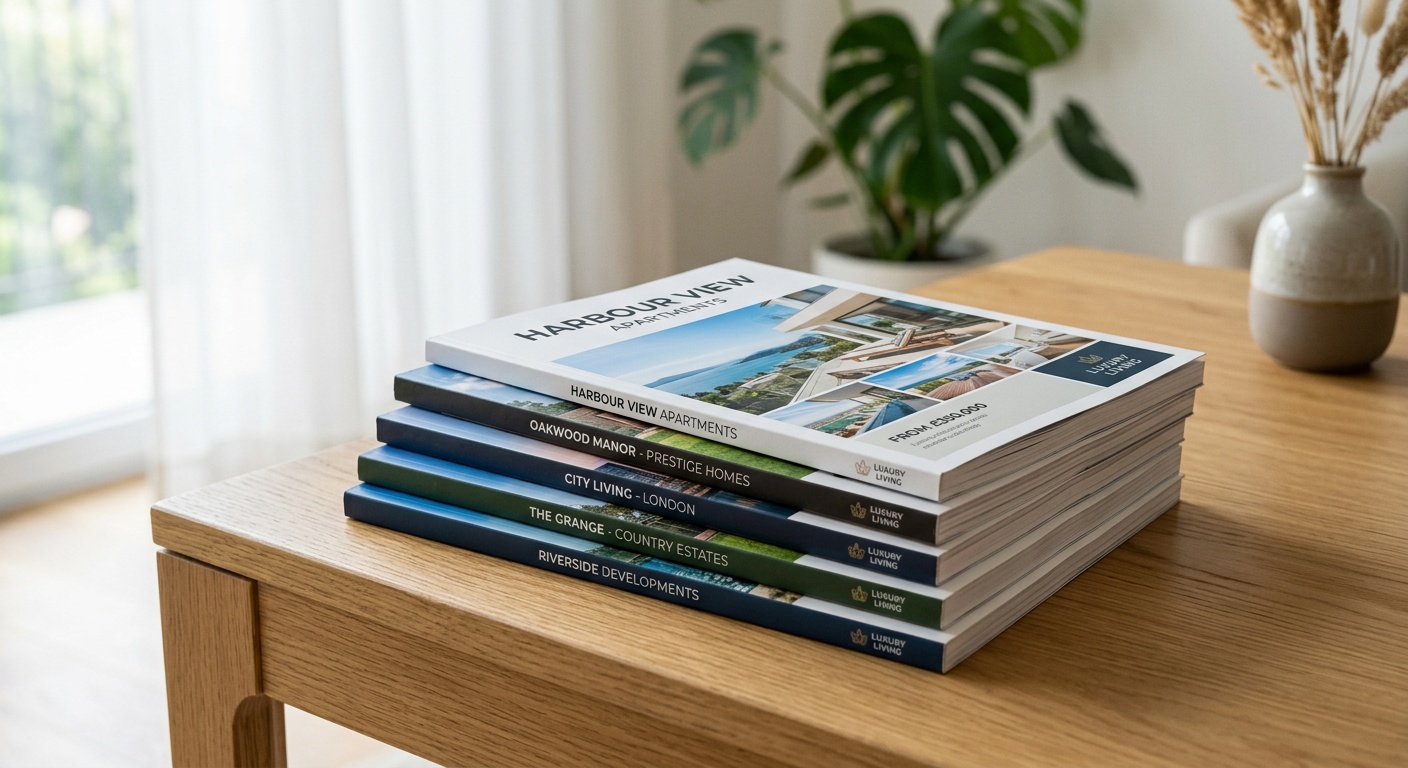
Here’s the straight talk: digital fatigue is real. Buyers scroll past listings faster than agents can post them. A tangible brochure, sitting on a kitchen counter or coffee table, doesn’t compete for a click—it simply exists in physical space, waiting to be picked up again and again.
What The Data Actually Shows
Industry surveys from property marketing associations in early 2026 indicate that 68% of homebuyers still request or expect a printed brochure during a show unit visit, even when digital walkthroughs are available. Meanwhile, retention studies suggest printed material is recalled 40% more accurately a week later compared to a digital PDF opened once and forgotten.
As one Singapore-based property marketing consultant put it: “Digital gets you the appointment. Print gets you the deposit.” That distinction matters because the buyer journey for real estate is rarely linear—it often spans weeks or months, multiple viewings, and several decision-makers within a household who weren’t even at the showflat.
Why Multi-Decision-Maker Households Change the Equation
Property purchases are rarely solo decisions. A spouse, parent, or business partner who wasn’t present at the launch event still needs to be convinced. A brochure travels home in a bag, gets left on a dining table, and becomes the reference document during that all-important “should we do this?” conversation. No digital link replicates that passive, ambient presence quite as effectively.
The Psychology of Tangibility
Behavioral marketing research consistently shows that physical materials trigger what’s called the “endowment effect”—people assign more value to things they can physically hold. A glossy, well-weighted brochure with tactile paper stock subtly signals quality and permanence, which aligns psychologically with the biggest, most permanent purchase most people will ever make: a home.
Three Reasons Print Still Converts Buyers
- Credibility signaling: A premium print piece implies the developer invested real capital in the project, not just in a landing page.
- Offline accessibility: Not every buyer segment—especially older or overseas investors—is comfortable navigating interactive digital brochures or AR floor plan tools.
- Sales enablement: Agents on the ground report that having a physical piece to walk clients through, page by page, controls the narrative better than a shared screen where notifications and distractions compete for attention.
Case Studies From Recent Launches
Consider a mid-sized condominium launch in Kuala Lumpur in late 2025. The developer initially planned an entirely paperless campaign, relying on QR-code-driven digital brochures. Show gallery footfall was strong, but conversion from viewing to booking lagged behind projections by nearly 18%. Mid-campaign, the marketing team reintroduced a limited-run printed brochure for serious leads only. Within six weeks, booking conversions among that segment rose by 22%, according to internal sales tracking shared with agency partners.
A second example comes from a landed housing project launched in Johor Bahru in early 2026, targeting cross-border Singaporean investors. The developer produced a bilingual print brochure specifically because many older investors in this segment preferred physical documentation they could bring to family discussions or financial advisors. Sales staff noted that 3 out of 5 signed bookings referenced “the brochure” specifically during closing conversations, even though a digital version existed.
A third, smaller-scale case: a boutique villa development in Bali used hand-delivered brochures to a curated list of high-net-worth prospects instead of mass digital outreach. The personalized, tactile approach reportedly generated a 30% higher response rate for private viewing requests compared to their previous email-only campaign.
Print vs Digital: A Side-by-Side Comparison
| Metric | Print Brochure | Digital Brochure/PDF |
|---|---|---|
| Average recall after 7 days | 62% | 22% |
| Perceived credibility (survey score /10) | 8.1 | 6.4 |
| Cost per unit (est. 2026 pricing) | $1.20–$4.50 | $0.05–$0.20 |
| Suitable for offline household discussion | High | Low |
| Environmental footprint per 1,000 units | Moderate (offset via recycled stock) | Low |
Reading the Numbers Correctly
Digital wins decisively on cost and environmental footprint, and it should absolutely remain the backbone of top-of-funnel awareness campaigns. But when you’re measuring what actually pushes a hesitant buyer over the line—recall, credibility, and offline influence—print still holds a measurable edge in 2026, particularly for high-consideration purchases like property.
Visualizing Buyer Trust by Marketing Format
Common Challenges and How to Solve Them
Challenge 1: Budget constraints. Printing feels like a sunk cost compared to infinitely reusable digital assets. Solution: print in smaller, high-quality limited batches for serious leads rather than mass distribution, and reserve bulk digital assets for early-stage awareness.
Challenge 2: Sustainability concerns. Developers increasingly face pressure to reduce paper waste. Solution: use FSC-certified recycled stock and clearly state this on the brochure itself—it becomes a credibility booster rather than a liability.
Challenge 3: Content becoming outdated quickly. Pricing, unit availability, and promotions change fast. Solution: separate “evergreen” brand and lifestyle content (printed) from time-sensitive pricing sheets (digital or loose insert cards), so your core brochure doesn’t need reprinting every time a promotion updates.
Practical Tips for Designing a High-Impact Brochure
- Lead with lifestyle imagery before floor plans—buyers emotionally connect before they analyze.
- Use QR codes strategically to bridge print and digital, linking to virtual tours or mortgage calculators.
- Choose paper weight and finish deliberately; a heavier matte stock outperforms thin glossy paper in perceived value tests.
- Keep pricing on a removable insert, not the main spread, to extend the brochure’s shelf life.
- Include a clear, singular call-to-action per section rather than overwhelming pages with information.
Integrating Print Into a Broader 2026 Marketing Funnel
The smartest developers this year aren’t choosing print or digital—they’re sequencing both. Digital ads and short-form video generate initial interest and drive foot traffic to the showflat. Print brochures then take over at the consideration stage, reinforcing decisions made at home, away from the sales gallery’s persuasive environment. Finally, digital retargeting and WhatsApp follow-ups close the loop for undecided leads.
Frequently Asked Questions
Are print brochures becoming obsolete with virtual reality showflats?
Not obsolete, but repositioned. VR and AR tools are excellent for spatial visualization, but they don’t travel home with a buyer’s spouse or parents. Most successful 2026 launches use VR for the in-person experience and print for the take-home reinforcement.
How many brochures should a typical launch print?
It depends on project scale, but many mid-sized launches now print in batches of 200 to 500 rather than the thousands common a decade ago, reserving physical copies for genuinely interested prospects rather than mass handouts.
Does print brochure quality really affect buyer perception of the developer?
Yes. Multiple sales teams report that a flimsy, poorly printed brochure can subtly undermine confidence in a project’s build quality, even if unrelated. Buyers make associative judgments, and print quality is often an unconscious proxy for construction quality.
Your Roadmap Forward
Print brochures aren’t a relic of pre-digital real estate marketing—they’re a deliberate, strategic tool that complements everything digital campaigns can’t achieve on their own. As property launches in 2026 compete harder than ever for shrinking buyer attention, the tactile, credible, and household-shareable nature of print gives developers a genuine edge at the exact moment it matters most: the decision.
- Audit your current funnel and identify where print could reinforce, not replace, digital touchpoints.
- Produce smaller, premium print batches targeted at serious leads rather than mass giveaways.
- Separate evergreen brand content from time-sensitive pricing to extend brochure relevance.
- Track conversion, not just impressions, to measure print’s real contribution to bookings.
So, as you plan your next launch, ask yourself: is your marketing budget optimized for clicks, or for closings? The developers getting this balance right in 2026 aren’t choosing sides in the print-versus-digital debate—they’re building funnels where each format does what it does best.