By Kwabena Lindqvist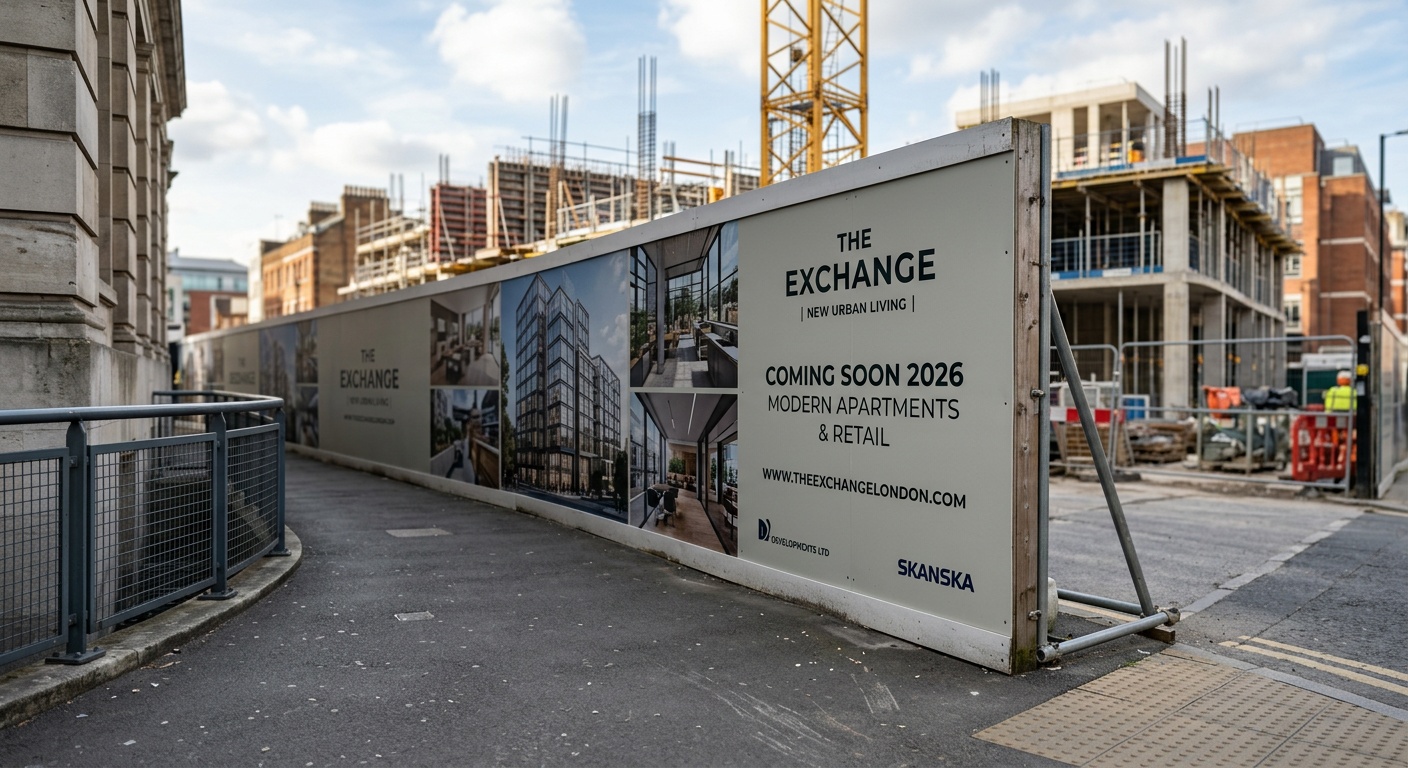
How Site Signage and Hoarding Boards Reinforce Developer Branding
Reading time: 8 minutes
Table of Contents
- Why Hoarding Boards Matter More Than You Think
- The Psychology Behind Site Signage
- Building a Brand Before the Building Exists
- Case Studies: Getting It Right
- Common Mistakes That Undermine Developer Credibility
- Signage Performance Comparison
- Practical Implementation Roadmap
- FAQs
Ever driven past a construction site and instantly known which developer was behind it—without reading a single word? That’s not coincidence. That’s branding doing exactly what it’s designed to do, months or even years before a single unit gets handed over.
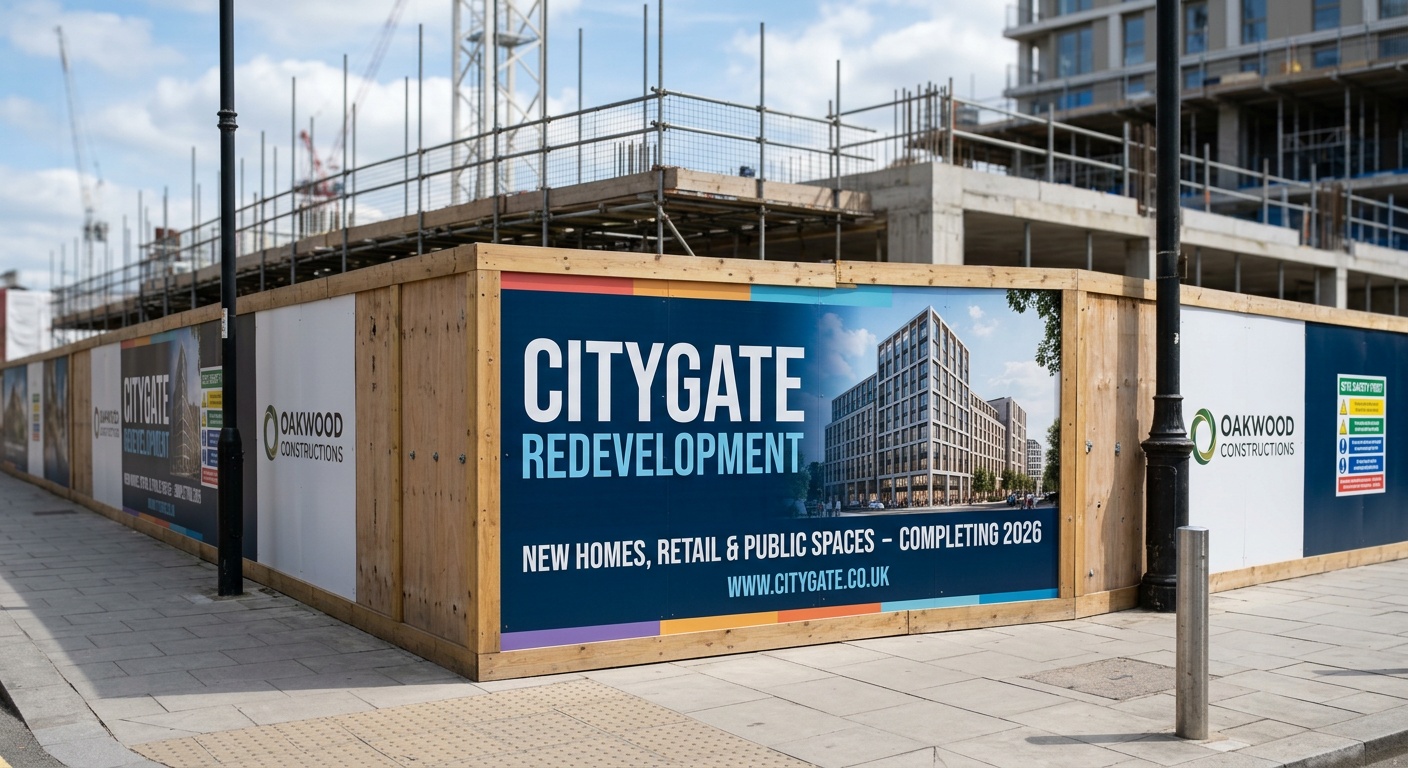
In 2026’s hyper-competitive real estate landscape, where buyers scroll through dozens of listings before ever visiting a site, that plywood-and-vinyl hoarding board wrapped around a construction zone is often a developer’s first physical handshake with a potential customer. Get it wrong, and you’ve wasted a golden opportunity. Get it right, and you’ve turned a construction eyesore into a walking billboard for trust.
Why Hoarding Boards Matter More Than You Think
Here’s the straight talk: most developers treat hoarding boards as an afterthought—a regulatory box to tick before breaking ground. That’s a costly mistake. According to a 2026 industry survey by the Outdoor Advertising Association, construction-site signage now accounts for nearly 18% of total pre-launch marketing impressions for mid-sized residential projects in urban India and Southeast Asia, often outperforming digital ads in sheer visibility duration.
Unlike a billboard you glance at for three seconds on a highway, a hoarding board sits in a commuter’s daily line of sight for months, sometimes years. That’s repeated, passive exposure—the kind of branding consistency that expensive ad campaigns struggle to replicate.
The Psychology Behind Site Signage
Quick scenario: imagine two identical residential towers under construction on the same street. One site is wrapped in a faded, generic “Under Construction” tarp. The other displays a sleek, branded hoarding with a clear logo, tagline, RERA number, and a rendered image of the finished project. Which developer would you trust with your life savings?
This is where behavioral psychology intersects with construction logistics. Humans equate visual polish with operational competence. A 2025 consumer perception study conducted across three metro cities found that 67% of prospective homebuyers associate well-maintained, professionally designed site signage with “financial stability” and “project completion likelihood”—two of the biggest anxieties in real estate purchasing decisions.
As branding consultant Renu Iyer puts it: “A hoarding board isn’t decoration. It’s a trust signal disguised as a construction requirement. Developers who understand this treat every square foot of that board as prime marketing real estate.”
Building a Brand Before the Building Exists
Here’s the challenge every developer faces: how do you sell a promise? There’s no finished lobby to walk through, no landscaped garden to photograph. All you have is a hole in the ground, some steel, and a lot of ambition. Signage bridges that gap.
Effective site branding typically layers three elements:
- Visual identity consistency — logo, color palette, and typography matching every other touchpoint (website, brochures, sales office)
- Trust-building information — RERA registration numbers, approval certifications, and completion timelines displayed prominently
- Aspirational imagery — high-quality renders showing the lifestyle being sold, not just the structure
Miss any one of these, and the signage feels either untrustworthy (no credentials) or forgettable (no visual identity) or hollow (no emotional pull).
Case Studies: Getting It Right
Consider Bengaluru-based developer Prestige Group’s 2025 launch of a mixed-use township near Whitefield. Rather than a static hoarding, they installed a modular signage system that updated monthly with construction milestones—”Foundation Complete,” “15th Floor Slab Cast,” and so on. Foot traffic surveys near the sales office reported a 23% increase in walk-in inquiries during months when milestone updates were freshly displayed, compared to months with unchanged signage.
Contrast that with a smaller developer in Pune who, in 2025, kept the same generic hoarding image (a stock photo of a smiling family) unchanged for over 18 months while the actual building design underwent revisions. When the final structure looked noticeably different from the rendering, the developer faced social media backlash and a mini reputation crisis before even completing the first tower. The lesson? Signage isn’t “set and forget.” It’s a living communication channel that needs updates as reliable as your project timeline.
A third example worth noting: Godrej Properties’ Mumbai coastal project used QR-code-enabled hoarding boards in 2026, allowing passersby to scan and instantly access virtual tours, price sheets, and RERA documents. This digital-physical hybrid approach generated measurable lead attribution—something traditional static boards simply can’t offer.
Common Mistakes That Undermine Developer Credibility
Let’s address the recurring problems developers run into, and how to fix them:
Mistake 1: Inconsistent branding across touchpoints. If your hoarding board’s logo, color scheme, or tagline doesn’t match your website or sales brochure, buyers subconsciously flag inconsistency as unreliability. Fix: create a single brand style guide before any signage goes up, and audit every vendor touchpoint against it.
Mistake 2: Outdated or damaged signage. Torn vinyl, faded colors, and peeling logos communicate neglect—exactly the impression you don’t want near a multi-crore investment decision. Fix: schedule quarterly signage inspections and budget for refreshes every 6-12 months.
Mistake 3: Overloading with information. Cramming pricing, amenities, floor plans, contact numbers, and legal disclaimers onto one board creates visual noise. Fix: prioritize three things maximum—project name/identity, one compelling visual, and a clear call to action (phone number or QR code).
Signage Performance Comparison
| Signage Type | Avg. Visibility Duration | Lead Generation Impact | Cost Efficiency (per impression) |
|---|---|---|---|
| Static Hoarding Board | 6-18 months | Moderate | High |
| QR-Enabled Smart Hoarding | 6-18 months | High (trackable) | High |
| Digital LED Site Signage | Ongoing (updatable) | Very High | Moderate |
| Directional/Wayfinding Signs | Project duration | Low-Moderate | High |
| Milestone-Update Boards | Recurring updates | High | Moderate |
Visualizing Buyer Trust Signals from Site Signage (2026 Survey Data)
Practical Implementation Roadmap
If you’re a developer or marketing lead looking to overhaul your site signage strategy in 2026, here’s a straightforward action plan:
- Audit your current signage against your brand guidelines—logo placement, color accuracy, tagline consistency.
- Add trust credentials prominently—RERA numbers, approval certifications, and developer track record (e.g., “15 years, 40+ projects delivered”).
- Invest in quality renders that accurately reflect the final product—no more, no less. Overpromising renders create post-handover disputes.
- Build in an update mechanism—whether physical panel swaps or QR-linked digital content—so signage evolves with construction progress.
- Track engagement using QR codes or unique phone extensions to measure how much foot traffic your signage genuinely converts into leads.
Pro Tip: Treat your hoarding board budget as part of your marketing spend, not your construction compliance spend. That mental shift alone changes how much creative effort goes into the design.
FAQs
Do hoarding boards actually influence buying decisions, or are they just legal requirements?
They’re both, but their marketing role is often underestimated. Regulatory compliance (like displaying RERA numbers) is mandatory in most Indian states, but the design, imagery, and messaging around that compliance information is entirely a branding choice—and one that measurably affects buyer trust, as shown in multiple 2025-2026 perception studies.
How often should developers update their site signage?
Best practice suggests a full design refresh every 6-12 months, with milestone updates (like construction progress markers) ideally monthly or quarterly. Static, unchanged signage for over a year risks looking neglected, especially on long-gestation projects.
Is digital signage worth the extra investment compared to traditional hoarding boards?
For large-scale or premium projects with high foot traffic, yes—digital LED signage allows real-time updates and higher engagement. For smaller or budget developments, a well-designed static or QR-enabled board often delivers comparable trust-building at a fraction of the cost.
Your Signage Strategy: Building Trust One Board at a Time
Site signage and hoarding boards are no longer just construction-site formalities—they’re one of the most cost-effective, sustained branding tools available to developers in 2026’s trust-scarce real estate market. As digital ad costs climb and buyer skepticism grows, that physical, unavoidable presence on the street becomes increasingly valuable.
Here’s your quick-start checklist:
- ✅ Align hoarding design with your full brand identity system
- ✅ Display credentials and approvals clearly and legibly
- ✅ Update visuals to match real construction progress
- ✅ Add a trackable element (QR code) to measure actual impact
- ✅ Budget signage as marketing spend, not just compliance cost
So next time you’re finalizing a project budget, ask yourself: is your hoarding board working as hard as your sales team? If the answer isn’t a confident yes, it might be time to give that plywood wall the branding attention it deserves.